
The Invisible Assault
Breaking the Scent of Prey: A Story of Presence

The attacks always waited until she was alone.
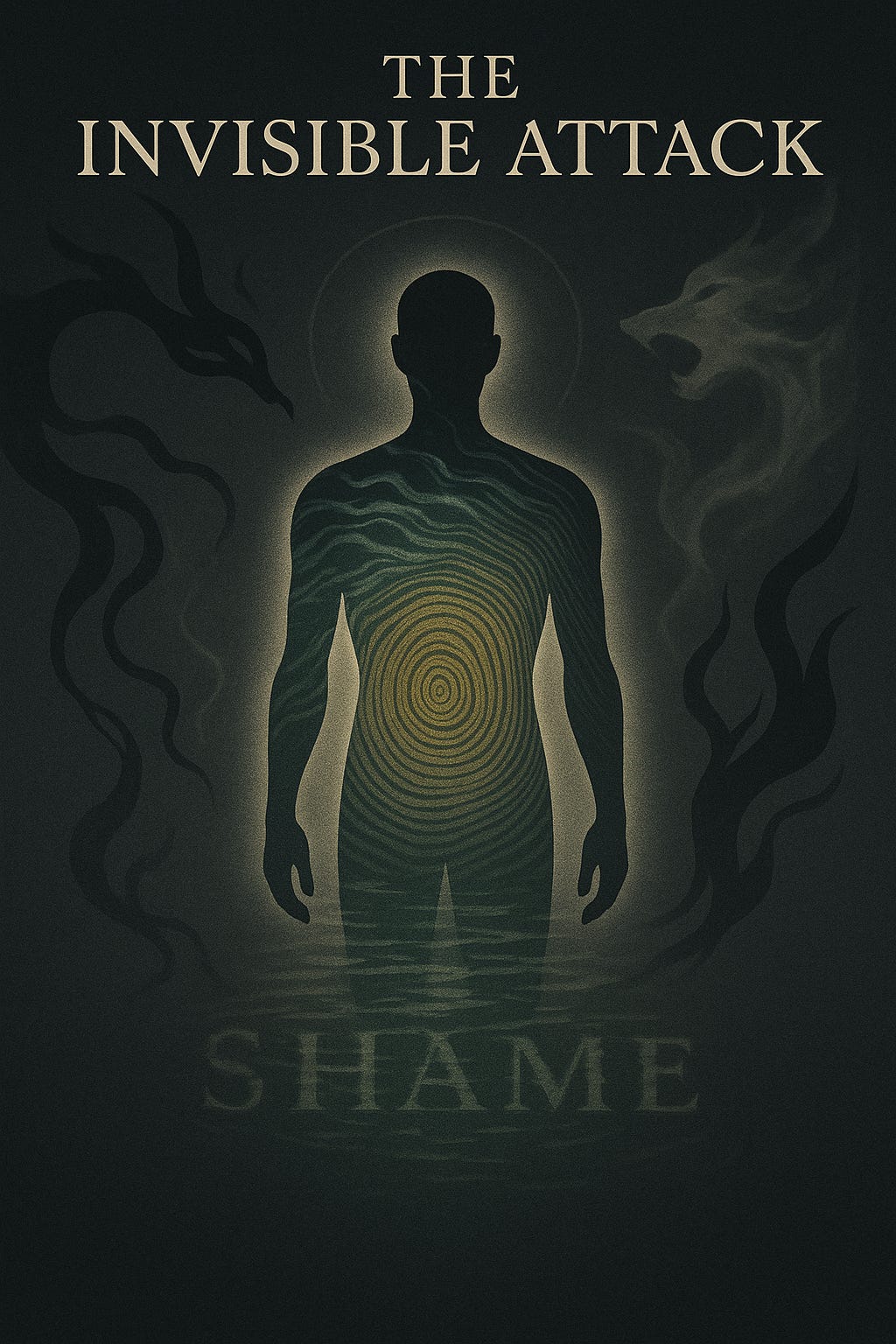
By late afternoon, when the light on her kitchen table thinned from honey to iron, Standing Brown Bear felt the pressure begin—first a hum beneath the skin, then the slow tightening around the ribs as if a belt were being drawn through her chest. She set the cedar stave on a cloth, meaning to carve prayer marks along its length. The knife slipped. The blade kissed her palm. Blood welled up—too dark in the fading light, a bruise-colored bloom that made her stomach lurch with the taste of metal.
The air changed. The house’s breaths—old wood settling, the refrigerator’s distant click—fell away. Something moved that had no footfall. Thorny vines coiled around her heart, not in sight but in sensation, thorns pressing from the inside. Invisible wasps found her forearms, her throat, her cheeks, stinging without leaving marks. She gasped, hands on the table, the cedar stave rattling against ceramic like a bone in a bowl. The room smelled suddenly of extinguished candles and wet copper.
Her knees met the plank floor. It was cool against her skin, gritty with dust her broom had missed. She tried to breathe slowly but her breath came raveled, snagging on fear. Shame spoke with a practiced voice in her head—small, familiar, merciless: Who do you think you are? Too weak. Too much. Not enough. The voice widened the holes in her field; she could feel them widen, doors swinging open onto a night full of watchers.
The pressure built until there was nothing left to contain it. “Great Mystery,” she cried, and her voice cracked—the sound of green wood splitting. “Why am I being hunted? What shadow follows me? When will this change? Why do I keep being attacked, spiritually, physically, emotionally? Remove the scales from my eyes. Show me the truth. Soften the waters in my heart so I can once and for stopping my life force from being siphoned” The words flew from her into the house’s corners and were swallowed. Even the clock held its breath.
Silence gathered, dense as moss. In that hush something steadied inside her—not courage exactly, but a refusal to be devoured. She stood on shaking legs and pressed her cut palm to her chest, as if to hold the fractured pieces together until she could stitch them. She took her shawl, the small pouch of offerings, the cedar bundle from the nail near the door. The floor creaked once as she left, like an elder’s blessing or a warning.
Outside, the air tasted clean, anise and damp stone. Twilight poured cold blue between the trees. She walked quickly at first, then slower, following the path her feet knew by memory to the brook hidden in the ribs of the forest. With each step, the house and its contained darkness fell away. Ferns brushed her calves; the touch left the smell of green on her skin. A flicker of wings passed her ear—just a moth, but it felt like the forest checking her name against a list.
By the time she reached the brook, the sun had lowered enough to lace the water with gold thread. The sound of it—constant, deliberate—met her and unbraided her breath. She knelt. Cold crept through her skirt and kissed her knees. She opened the pouch and took out an offering: sweetgrass braided with cedar tips, a pinch of tobacco, a single bead from her grandmother’s necklace. She placed them one by one into the current. The sweetgrass darkened, released a sweetness like warm hay and lemon; the bead flashed and tumbled into a hollow among stones.
“Great Water Nation,” she said, the words settling into the steam of her breath, “I come to calm my anxious soul, to rinse the traps of my mind, to cleanse the waters of my pericardium surrounding heart. I ask you to soften the waters of my paradigm so truth can pass without scaring my heart tissues.”
Behind her, the great red cedar answered. It had always stood there, a column of time holding up the sky. Now it shifted, a slow flex like a giant stretching after long stillness. No wind, but branches murmured. She turned and placed her palm to its bark. Sap resin scented the air—sharp, medicinal, old. “Grandfather Cedar,” she said softly, "I mean no harm to the sacred energies of this land," she whispered, voice cracking with desperation. "But I am being hunted. The attacks—they tear at me like wolves, ripping pieces of my soul each time I rebuild. They drain me until I'm hollow, until I can barely remember who I am. I beg you—I plead for your wisdom to shield me from these ravenous shadows that feast on my spirit."

A spirit wind came then, arriving from everywhere at once and nowhere she could point to. It wound around the cedar’s trunk and combed through its limbs. Little branches—shattered tips, thin sprigs—fell like a soft rain, tapping the surface of the brook. The current gathered them as if it had hands. She watched, still as stalking her own breath, as the pieces swiveled, drifted, and clicked into place. The word formed itself cleanly, unarguable as a bruise:
SHAME.
The naming hit the bone. Her eyes burned. She wanted to deny it—no, I am strong, I am beyond that, but her body gave the truer answer: a deep, old flinch, the way a deer’s muscles remember the echo of a rifle. She pressed her wounded palm harder to her sternum, feeling the throb answer from the water.
A rustle sounded in the trees—soft at first, then closer. She stood and turned. Nothing visible. But the air grew pricked with presence, as if a veil had been lifted between this world and the next. “Show yourself,” she called, steady as she could shape it. Her breath clouded and vanished. The presence seemed to lean, listening.
Another sound—quieter than the first. A peep from the ferns at the brook’s edge. She found it by its trembling: a wren, no larger than her thumb, crouched beneath a small tent of cedar needles. Its feathers puffed from cold and fear. Its breast beat like a fist knocking from inside a door.
She lowered herself until her face was level with the bird. “I am Standing Brown Bear,” she said. “I mean no harm. Please—come out and show yourself.”
The wren’s eye caught the last light—bead-black, bright. “I cannot,” it peeped, and though the sound was small, the words were plain as human speech in her mind. “I am ashamed of my voice. It is too thin. I am ashamed of my smallness. Predators smell shame. I am always prey.”
Standing Brown Bear felt her throat tighten—the familiar choke of being seen too truly. She sat back against Grandfather Cedar and opened her hand, palm up on the moss between them. "Come," she commanded, her voice raw with desperation. "Sit with me in this wound. Our shame bleeds the same scent that draws predators through the night. I dragged myself to this sacred place to finally see the gaping holes where they enter and feed."
The wren hopped forward, hesitated, then leaped. Its feet were light but definite against her skin, cool pinpricks of life. It crept up and tucked itself in the hollow above her heart. The weight was nothing, but the presence was entire. The brook’s song softened to a hush, like drums heard from far away through trees.
The wren spoke as being divinely guided from ancestral wisdom. “Shame begins as comparison—your song against another’s cry, your plain brown against someone else’s shimmer. Shame tightens the field. The throat narrows. Breath shortens. The spirit pulls back from the edges of the body like a tide. That pulling back leaves gaps. Fear finds those gaps and widens them. The scent of prey rises like steam. Then come the feeders—some with faces, some with no faces, some wearing the faces of friends. Some throw careless thoughts like hooks. Some cast darkness on purpose. All of them look for thinned places. Shame is a thinning.”
“How do I close what I have thinned?” she asked, speaking to the bird, to the cedar, to the water, to the ancestors that watched from beyond the veil. “How do I walk without smelling like prey?”
The wren tilted its head. Voice trembling but sincere: Shame is a mask of fear, a fear of truth, a fear of being seen, a fear of true connection, when you walk with Shame, it walks in front of you, for everyone to meet and interact with as you. It steals your true identity as it slithers its way to gain access bit by bit , piece by piece , akin to a slow poison within your blood, tainting your senses so the entity of Shame can thrive through your mind, and body. Looking for ways to anchor itself within your etheric field. When you meet others, they are meeting the energy of shame first, forming other toxic connections so it may have other future tentacles to reattach itself to you. Shame lurks in the shadows, its tendrils reaching out into the future, searching for any opportunity to attach itself to you once again.
he wren lifted her head, and when she spoke again, the voice that came through her felt older than feathers—an ancestor riding a small body.
“Listen, daughter,” the wren said. “Shame walks before you like a mask. Take it off with your own hands. Do exactly as I say.”
She hopped down to the moss and pecked at a flat, wet stone until it shone. “There are seven moves. We will make them here so your bones remember.”
1) Name the Mask
“First, name the mask you wear among people.”
Standing Brown Bear frowned, breath catching. The wren nodded toward the water. “Ask yourself, What do I want them to feel about me right now? Write the answer with your voice.”
Brown Bear dipped three fingers in the brook and touched brow, throat, heart, cold burning like truth. “I want them to feel… that I am unbothered. Strong. Above the wound.”
“Good,” said the wren. “That is the mask. Now name what it hides.”
She swallowed. “That I am afraid they will see I am… not enough.” The words scraped coming out, and the forest made no sound to save her from them.
“Say this out loud,” the wren ordered. “I see the mask. I see what it hides.”
“I see the mask,” Standing Brown Bear whispered, palm trembling over her chest. “I see what it hides.”
The brook answered with a brighter riffle, as if approving.
2) Refuse Unauthorized Judgment
“Second,” said the wren, “close the courtroom you never meant to build.”
“How?” Standing Brown Bear asked.
“When judgment comes—from a stranger’s mouth or your own skull—say inside your chest: No jurisdiction.” The wren shook cedar needles from her back like dust. “Treat every barb as data, not a verdict.”
Standing Brown Bear lifted her shoulders and brushed them off, a simple gesture that sent a hot sting up her neck and then away. “No jurisdiction,” she said, testing the weight of it. The words tasted like clean iron.
3) Radical Truth + Self-Forgiveness
“Third: truth and forgiveness live on the same page,” the wren said. “We don’t carry one without the other.”
“I have no paper,” Standing Brown Bear said, almost apologizing to the trees.
“You have cedar and stone,” the wren replied. “Split the world down the middle with your breath.”
Standing Brown Bear took the cedar stave she had meant to carve at home and laid it across her knees. With the pad of her thumb she traced an invisible line down its center, then spoke to one side and then the other:
“Truth: I hid my voice today, and called it wisdom.”
“Forgiveness: I forgive myself for hiding. Tonight I will send one clear message.”
Cedar resin lifted, sharp and green, and her cut tingled as if the blood itself leaned toward the words.
4) Place Shame in Your Story
“Fourth,” the wren said gently, “give shame a room in your house so it stops sleeping in your bed.”
Standing Brown Bear closed her eyes. Images moved: the kitchen floor, the blade slipping, thorn-vines around her heart. “This is the Ordeal,” she said hoarsely. “It teaches sovereignty.”
“Good,” chirped the wren. “When you know the chapter, you stop mistaking it for the whole book.”
5) Opposite-Action Reps
“Fifth: do the opposite of the mask—one small act, five breaths long.”
“The opposite of unbothered is… honest,” Standing Brown Bear said, as if admitting an affair.
“Then tonight, one honest line,” the wren said. “A boundary or a need. Send it. Speak it. Scratch it into wood. Tiny is holy if it’s true.”
Standing Brown Bear drew the cedar close and, with her thumbnail, pressed a shallow line that would guide the knife later. “Tomorrow at dawn,” she said, “I will tell her: I won’t accept last-minute demands that cost my health. I can help next week.” The sentence frightened her and freed her in the same breath.
6) Shift Attention Outward
“Sixth,” said the wren, “pull the lamp away from your own face. Shame fattens on self-watching.”
“How?” she asked.
“Before you speak to anyone,” the wren said, “ask: What would make this person feel safe, seen, or respected? Lead with one question that serves that need.”
The brook laughed lightly over small stones. Standing Brown Bear felt her shoulders drop. The imagined rooms of future conversations brightened, the spotlight veering off her and onto care.
7) Spot the Tells → Reset
“Seventh and always,” the wren whispered, drawing close to her throat, “catch your body’s warning—and close the gate before the wolves smell it.”
“What are my warnings?” Standing Brown Bear asked, already answering herself: “Tight throat. My shoulders climb. Breath goes shallow. Eyes blink too quick. A half-step backward I pretend is a sway.”
“Good,” the wren said. “When any one of those speaks, you do the reset at once:
Breath: four in, four hold, six out.
Words (quiet): Not prey. Sovereign.
Posture: heels heavy, crown tall, jaw soft.
Action: one opposite-action within ten minutes.”
Standing Brown Bear obeyed there and then. She inhaled to four, held, and let a long thread of breath move out to six, the air leaving her like a river emptying into evening. “Not prey,” she said without sound, lips barely shaping. “Sovereign.” Her heels found the earth’s weight; her jaw unclenched; something unlatched behind her sternum with a soft click.
The wren hopped back to her heart hollow, satisfied. “Now stitch these into your day so the scent of you changes.”
“How?” Brown Bear asked. “Give me a rhythm.”
“Morning,” said the wren, ticking each on an invisible bead. “Water on hands—touch brow, throat, heart. Say: I see the mask. I see what it hides. Choose one opposite-action for the day.
“Midday,” she continued, “when judgment breathes on your neck: No jurisdiction. Dust it off like burrs.
“Evening: Truth on the left, Forgiveness on the right. Place the moment in your story. Draw cedar smoke over your heart. Sleep.”
The wind shifted; the cedar above them let fall a single needle that slid down Brown Bear’s cheek like green rain. The brook’s skin lifted in gooseflesh where eddies met.
“What happens when I’m tested?” Standing Brown Bear asked, though her body already knew the answer would not promise ease.
“Three tests,” said the wren. “And you will meet them smiling.
“The Hook: someone tosses blame—your throat pinches. You say No jurisdiction, breathe 4–4–6, deliver one clean boundary. Do not sell the boundary. Say it once and be done.
“The Crowd: shame tells you to vanish. You shift attention outward—ask one serving question—then make one visible ask or gratitude.
“The Mirror: your own mind hisses the old names. You repeat the hiss as data, not a verdict, then answer with your Forgiveness line and do the opposite-action.”
The teaching settled like ash and like pollen—both weight and seed. Standing Brown Bear felt the ache in her palm, the sting-memory on her forearms, the old belt around her ribs loosening notch by notch.
She looked down at the wren. “And if I fall back?” she asked, voice small but not ashamed.
“Then you begin again,” the wren said simply. “Shame is patient. Be more patient. Predators prefer easy meals. You will not be easy.”
A hush moved through the grove, a shared breath. From somewhere in the cedar’s high rooms, a thin sunbeam found the wren’s back and lit a single feather. The wren lifted her head and sang—not a grand song, but a true one that threaded through Standing Brown Bear’s skin and fastened there.
Standing Brown Bear rose, the cedar stave under her arm, the stone warm in her pocket. She took one step along the path and felt her heels catch the earth the way a hook catches fabric—not to tear it, but to hold it in place while it mends.
“Not prey,” she mouthed to the trees. “Predators respect a true boundary. And say who I am—not as armor, but as a fact. I am not prey. I am sovereign. It is a scent. It is a frequency. Walk in it.
She stayed until darkness knit the branches together. The word in the water loosened, became a scattering again. A wind ran a hand through the cedar’s hair and was gone. The wren left her chest, landed on the cedar’s lowest limb, and sang—not loud, not impressive, but unmistakably itself. She pressed her hand to the place it had warmed and felt, for the first time in months, the lift of something that was not dread.
She walked home slow. Stars were coming out, small and stubborn. In the doorway, the house smelled only like itself—old wood and tea. She washed her cut with warm water and salt. She slept with her hand on her heart and dreamed a river running through a dark room, the water eddying around stones until the stones became doors and the doors closed softly, one by one.
In the morning the world had edges again. She carried a bowl of water onto the porch and breathed with it, four in, four hold, four out, four hold, the bowl’s rim cold against her fingers; she imagined the breath traveling through her bones like clear current. After, she lit a cedar tip and let smoke walk the corners of her rooms. “I am whole,” she said aloud, and the walls did not mock her. “I am untouchable. I am not prey.”
By noon, the sun found its way to her back step. When she opened the door, the sound reached her first—a strange, orderly buzzing, as if someone were sewing the air. Hundreds of paper wasps had gathered along the banister, shoulder to shoulder, wing to wing, their bodies a living braid. Her old life would have slammed the door and fled. Her legs remembered the urge to run. She did not run.
She stepped out slowly, the boards warm under her feet. The wasps lifted as a sheet, rose, made a small cloud, hovered. Their sound surrounded her, a woven hum that vibrated against her teeth.
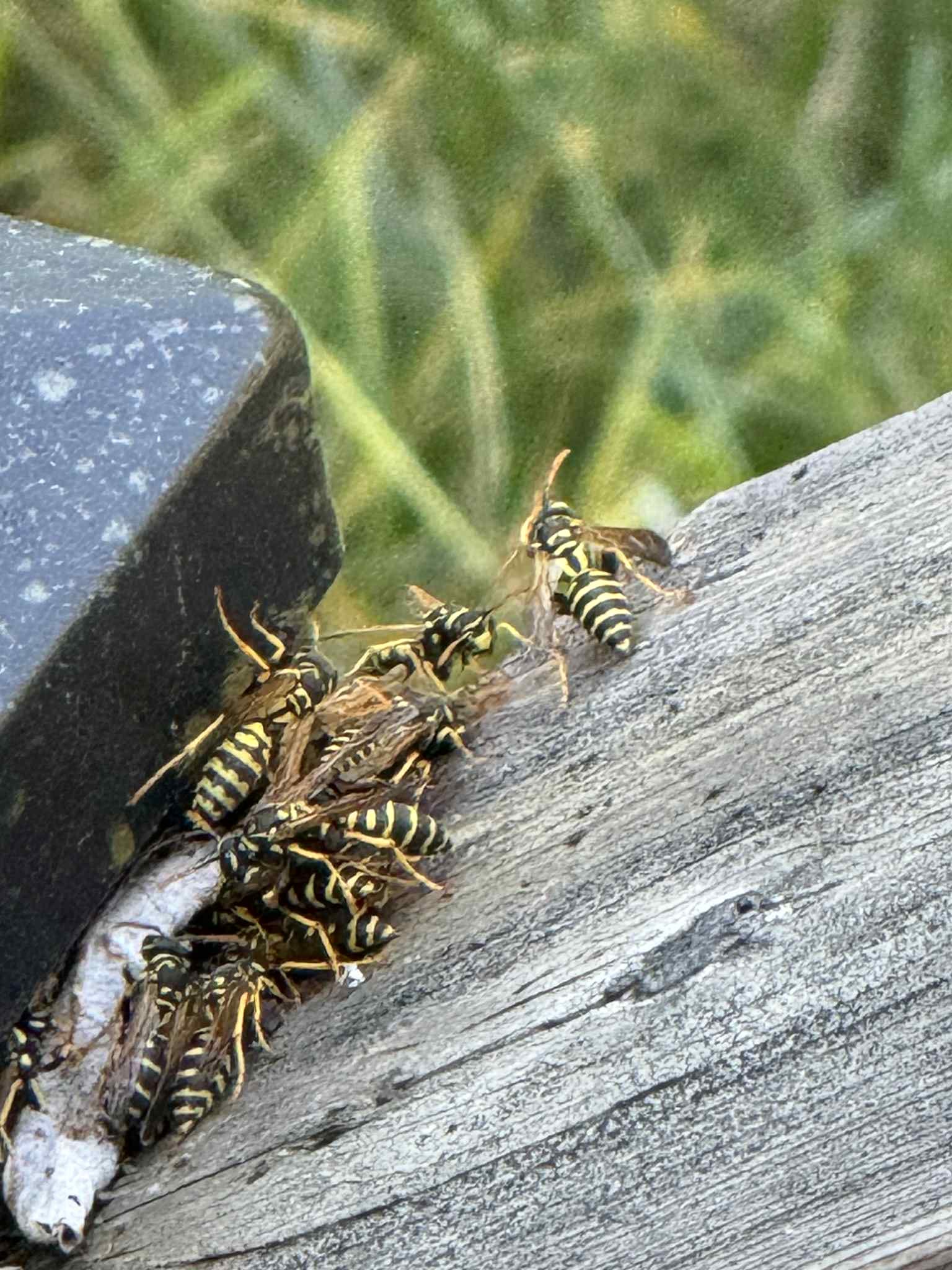
She stood still, kept her breath long. They settled again, the line re-forming where it had been. She took one more step. They rose, she held, they settled. A conversation without words: We will not cross if you do not cross. It tasted like an agreement, like respect. She felt something at the back of her neck unclench, a knot giving way.
She carried her coffee to the small table and felt the heat through the mug—bitterness on her tongue before she drank, a familiar comfort. A shadow fell across the table a heartbeat before the weight landed. A spider—huge, startling, red head bright as a berry, long legs banded black and gray—dropped from some invisible departure and struck wood with a sound like a tiny drum. Her body surged with the old lightning of alarm. Her knees coiled.
She did not move. She let the first wave of adrenaline pass through her like wind through tall grass and then out. The spider paused, as if deciding whether she was cliff or ground. It leaped from table to porch, then ran—impossibly graceful—to a rectangle of sun warming the boards.
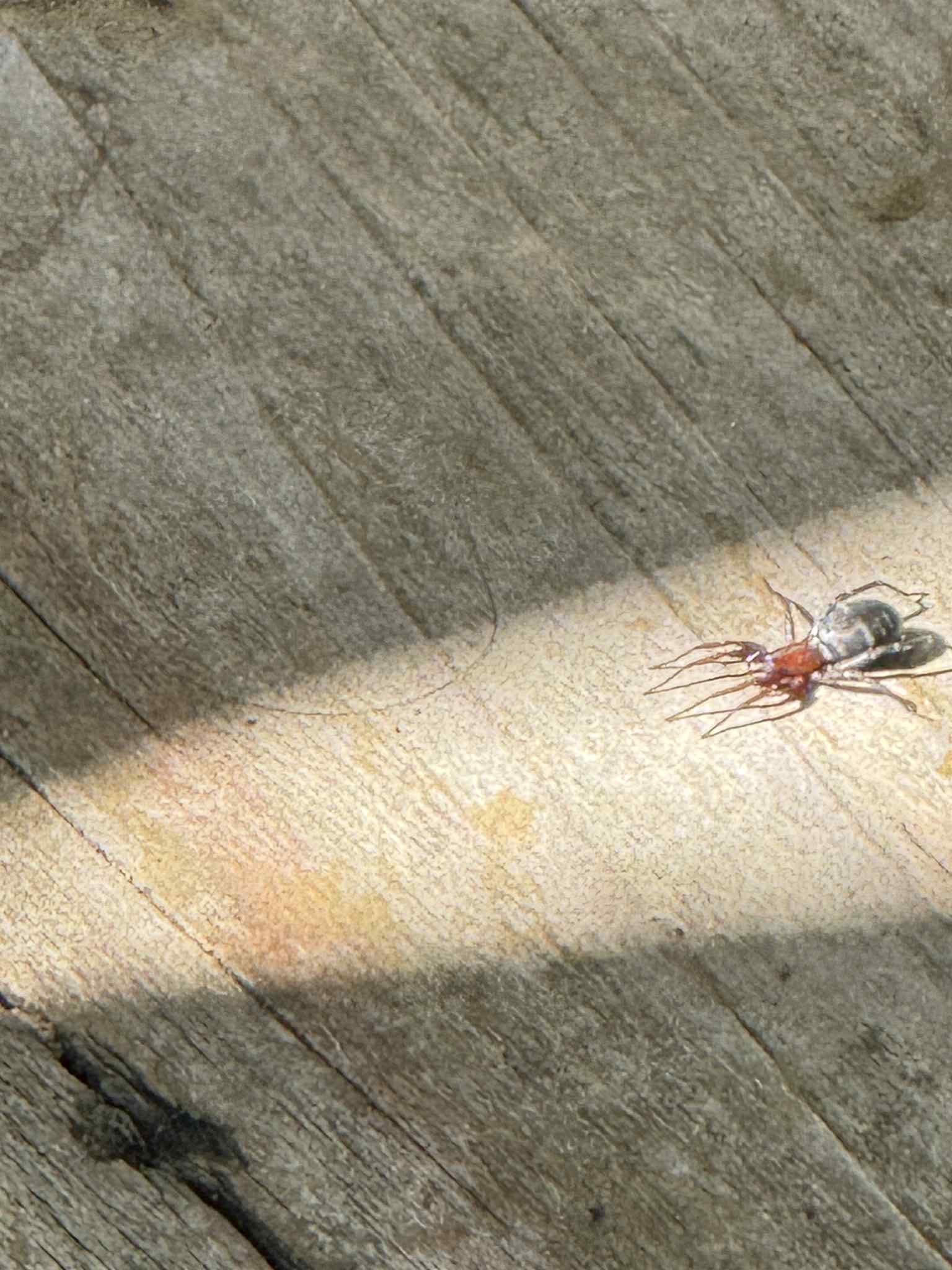
There it folded itself and opened again, a living compass settling on true north. To her right, the kingdom of wasps glittered; to her left, a predator basked. Between them, her. The air smelled of sun on sap, old wood, and the faint sweetness of the offerings she had carried home on her sleeves.
Her chest was quiet. For a long time she simply breathed and watched. That was the teaching: not wrestling, not pronouncements, not a hundred names against a single fear. Just a body that would not flee itself. The spiritual attacks would still come—she did not lie to herself; the world tests what we claim—but something in the scent of her had changed. The lower feeders who had gorged on her dread would come and find nothing they could hang their teeth in.
That night she wrote, not because writing fixes a life but because it makes a map. She wrote the steps as they had been given, not as commandments but as a protocol for return:
Name the mask & what it hides. Ask: “What do I want them to feel about me right now?” That’s the mask. Speak the opposite it hides. Touch water to brow • throat • heart and say: “I see the mask. I see what it hides.”
Refuse unauthorized judgment. When criticism (outer or inner) appears, say in your chest: “No jurisdiction.” Treat it as data, not a verdict—and brush your shoulders like flicking off burrs.
Radical truth + self-forgiveness (same page). One line of Truth, one line of Forgiveness, plus one tiny opposite action today.
Truth: “I hid my voice.” → Forgiveness: “I forgive myself; tonight I’ll send one clear line.”
Place it in your story. Decide the chapter: Refusal, Ordeal, or Atonement. Write one sentence: “This episode lives at (chapter) and teaches (lesson).” Shame gets a room, not the whole house.
Opposite-action rep. Do one five-breath behavior that makes the mask unnecessary (a boundary, a clear ask, or one vulnerable truth).
Shift the lamp outward. Before speaking, ask: “What would make this person feel safe/seen/respected?” Lead with one question that serves that need.
Catch the tells → reset the field. When throat tightens, shoulders climb, breath shallows, or blinks quicken:
Breath: 4–4–6 • Words: “Not prey. Sovereign.” • Posture: heels heavy, crown tall, jaw soft • Action: one opposite-action within 10 minutes.
Anchors: Water softens what shame hardens; Cedar steadies what shame scatters; Voice seals the field—if it shakes, let it shake and keep sounding.
Name who you are: I am sovereign. I am not prey.
*Walk like this—and let the world adjust.
People will tell stories of predators as if they are the point. Standing Brown Bear began to speak of them as teachers—wasps for boundaries, spider for shadow courage, wren for voice, cedar for spine, water for return. She did not romanticize harm; she did not minimize danger. She taught instead the scent of sovereignty: how not to offer yourself as supper to things that do not deserve you.
When love came to teach, it did not do so with velvet and lullabies. It arrived as a brook lifting a word made of cedar. It arrived carrying stings that left no mark and a red-headed spider falling from nowhere. It arrived in the voice of a small bird ashamed of its size, singing anyway. It did not make her life gentle. It made her real.
Days later a neighbor’s demand came sharpened like a hook. She felt the throat pinch, named it, and let it pass. No jurisdiction, she said in her chest, and aloud only one line: “I won’t take that on; I can help next week.” The hook had nowhere to land.
On her porch, the paper wasps lifted and settled as one; a spider uncurled in a strip of sun; somewhere in the cedars a wren stitched a small, defiant song. The air around her tasted like clean rain after lightning. Shadows pressed, and pressed against a field that held. They went looking elsewhere, and she went walking—home, and then deeper into the world—untouchable not because nothing could touch her, but because what did could not undo her. She smelled of cedar and cool water, and the smallest bird’s courage stitched above her heart.
“When Love comes to teach, you stop being prey and start being presence.”
Thank you for being here : )
with Love,
Standing Brown Bear